
Founders / owners
This wing includes the people who established small breweries (they may also be Brewers)
To view photos, toggle horizontally. To view bios, scroll vertically.

Bert Grant 2025

Ken Grossman 2025

Jim Koch 2025

Fritz Maytag 2025

Jack McAuliffe 2025
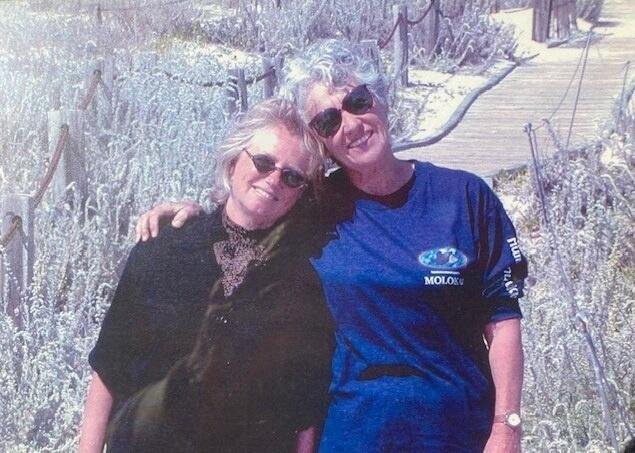
Suzy Stern and Jane Zimmerman 2025
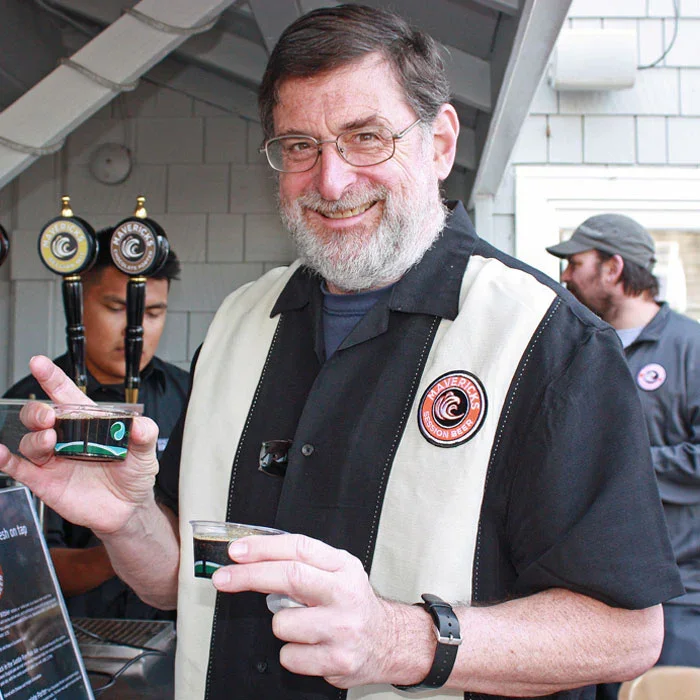
Pete Slosberg 2026
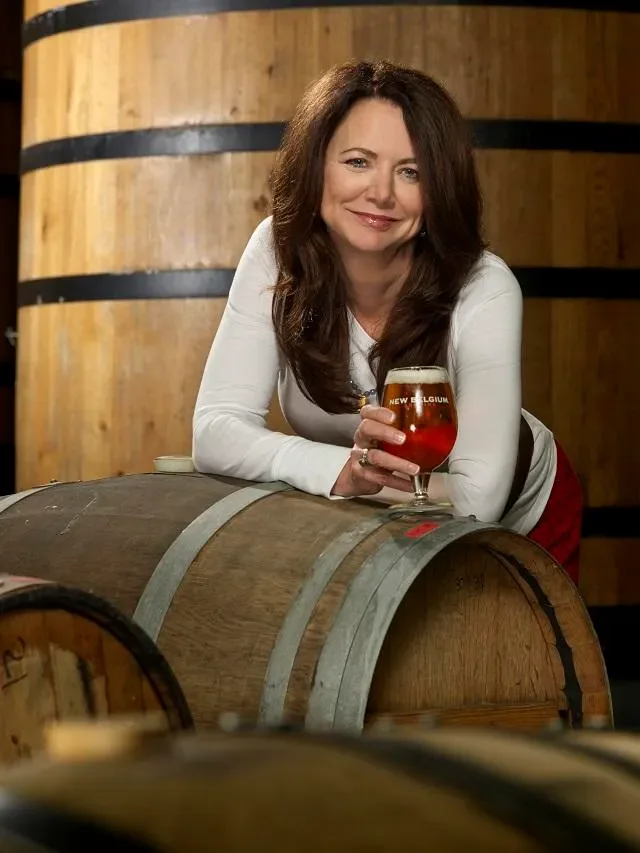
Kim Jordan 2026
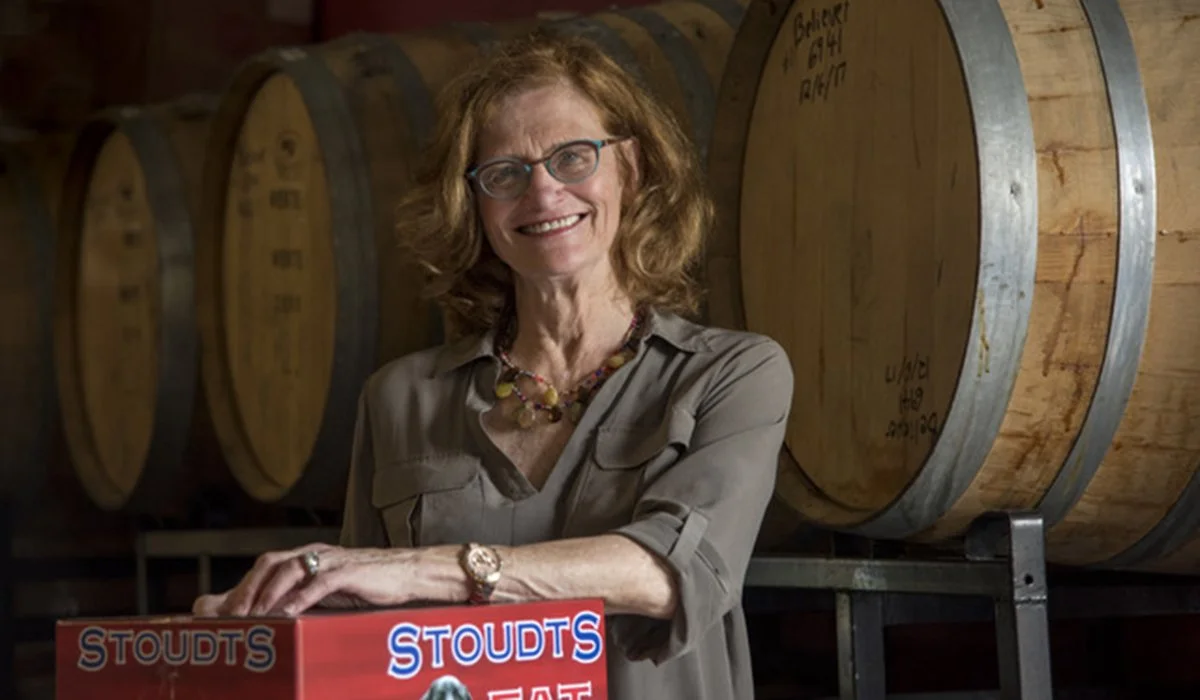
Carol Stoudt 2026
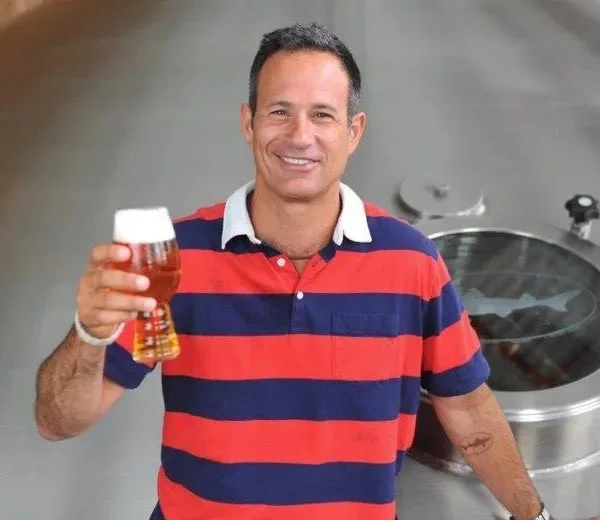
Sam Calagione 2026

Larry Bell 2026
2025 inductee
Jack McAuliffe
(May 11, 1945 - July 15, 2025)
McAuliffe was born in Venezuela due to his father’s work with the U.S. Government, but by third grade, the family had moved to Virginia. In 1964, he enlisted in the Navy and was stationed in Dunoon, Scotland, where he discovered Scottish ales. He began homebrewing at the time, which he continued after his discharge in 1968 while attending college on the G.I. Bill. He took a job in engineering in Sunnyvale, California but was already planning to open his own brewery.
When San Francisco proved too expensive, he set his sights a little farther north, and relocated to Sonoma, California. There, he persuaded two friends, Suzy Stern and Jane Zimmerman to become partners in the endeavor. They rented a property in 1976, where he built a 1-bbl brewhouse and began making beer the following year. While the New Albion Brewery was only open for six years, closing in late 1982, it was the first microbrewery built from scratch in the modern era, and became a blueprint for the craft beer revolution that followed.
McAuliffe left the industry, but has been welcomed back in recent years, honored for his legacy to American Craft Beer. Jack was retired and living in Arkansas until his passing in July of 2025.
2025 Inductees
Suzy Stern
Originally from the East Coast, and a former employee of the United Nations in New York, Suzy Stern, now Denison, moved to Sonoma County while her son attended Stanford. There she met Jack McAuliffe, who persuaded her to fund his dream of opening a microbrewery, so she contributed $1,500 and began working at the nascent New Albion brewery, learning as she went. She became one of the original brewers, and apart from a 10-day seminar in New York, was self-taught. After Don Barkley and Michael Lovett (who later opened Mendocino Brewery) were hired to brew, Stern took over administrative duties, which she continued until the brewery closed in 1982.
Jane Zimmerman
Zimmerman was a friend of Suzy Stern, and was introduced by her to Jack McAuliffe, who pitched them the idea of New Albion Brewing Co. She also invested $1,500 to help start New Albion Brewery and worked there at the very start. But Zimmerman left after less than a year, to go back to school at Sonoma State University, and later became a psychotherapist. She remained in Sonoma, California, where she worked at the Center for Healing Arts, but is now retired.
2025 INDUCTEE
Bert Grant
(May 17, 1928 – July 31, 2001)
Grant was born in Dundee, Scotland, but his family emigrated to Toronto, Canada when he was two. At age 16, he began working as a beer taster and went on to work for both Carling-O’Keefe and Stroh Breweries before turning to consulting work, holding several patents involving hop processing. He’s also credited with having built the first hop pelletizer. In 1967, he built two hop processing plants in the Yakima Valley, and made Washington his home from that point on. In 1982, he opened the first brewpub in the United States, officially the Yakima Brewing & Malting Co., but colloquially known simply as Grant’s Brewery Pub. Grant pioneered Imperial Stout and Scottish Ale, and was one of the first since Ballantine to brew an IPA. Grant was the consummate showman, often wearing a kilt and carrying a vial of hop oil to add to whatever beer he was drinking, saying, “All beer should have more hops.” Grant passed away in 2001 at the age of 73.
2025 INDUCTEE
Ken Grossman
Grossman grew up in southern California, where he began homebrewing with his brother at an early age. Attending college in Northern California, at Butte College, and then California State University, Chico, he opened a homebrew shop and began building by hand the brewery that would become Sierra Nevada Brewing Co. When the brewery opened in 1980, one of his first beers was Sierra Nevada Pale Ale, which redefined what was an English style, using native American hops — especially Cascade — as the more hop forward American Pale Ale. As the brewery grew, Grossman paid particular attention to both environmental and social impacts, and continued to innovate, developing the first fresh or wet hop ales, the hop torpedo, and adding a sustainability department to the company. They are currently the third-largest craft brewery, operating facilities in Chico, California and Mills River, North Carolina.
2025 INDUCTEE
Fritz Maytag
Originally from Iowa, a member of the Maytag appliance family, Frederick Louis Maytag III came to California to attend Stanford and never left. After graduation, a favorite lunch spot was the Old Spaghetti Factory in San Francisco, and one day the owner mentioned to him that the brewery that made his favorite beer, Anchor Steam, was about to close. Intrigued, he went to visit it, and bought a controlling interest that day in 1965. Anchor originally opened in 1896, one of many steam beer breweries on the West coast, but the only one remaining at the time. Maytag resurrected steam beer after exhaustive research and experimentation, and remade Anchor into the first craft brewery, introducing for the first time in the craft era, porter, IPA (in the form of Liberty Ale, which relied heavily on the new Cascade hop variety), barleywine, their Christmas Ale, and small beer, along with the Sumerian project recreating an ancient beer following a 4,000-year-old recipe. In 1993, Anchor diversified into distilling, producing whiskey and gin. Maytag sold the brewery in 2010 and retired to his home in northern California wine country. It would be hard to overstate the Father of the Modern Microbreweries’ impact and influence on today’s craft beer landscape.
2025 INDUCTEE
Jim Koch
Born in Cincinnati into a family that for five generations brewed beer, his father initially discouraged him from pursuing it. He initially worked with Outward Bound, before completing his dual MBA/JD from Harvard and joining Boston Consulting Group, where he spent several years counseling business leaders. But he was convinced there was an opportunity for flavorful beer and left consulting to found the Boston Beer Company.
Adapting his great-great-grandfather’s recipe for Louis Koch Lager, he launched Samuel Adams Boston Lager in 1985, and today it’s one of the largest beer brands in the country. Koch continued to push the boundaries of beer with such unique beers as Triple Bock, the Barrel Room Collection, and Utopias, one of the strongest beers in the world.
2026 Inductee
Larry Bell
(June 9, 1958 - )
Born and raised in the Chicago area, he attended college in Kalamazoo, Michigan and after graduating in 1980 he stayed in Michigan, where a fellow bakery employee introduced him to homebrewing. Three years later he opened a homebrew supply store, in part to get cheaper ingredients wholesale for his ultimate goal of opening his own brewery. Two years later, in 1986, he opened Kalamazoo Brewing right next door, which was later renamed Bell’s.
In 1991, the first of Bells’ epic parties, a.k.a. Eccentric Day, was held and two years later, after working with the state legislature to change the law, they opened a taproom called Bell’s Eccentric Café around the corner from the brewery. In 2003, Bell’s open a larger production brewery in nearby Comstock, and in 2012 upgraded to a 200-barrel brewhouse. In 2013, Bell opened a second brewery business on the Upper Peninsula called Upper Hand Brewery.
In 2010, Larry Bell received the Brewers Association Recognition Award. Bell has since sold both breweries and has retired from brewing.
2026 Inductee
Sam Calagione
(May 22, 1969 –)
Calagione grew up in Western Massachusetts and studied English at Pennsylvania’s Muhlenberg College. After moving to New York City for a writing program at Columbia, he instead discovered home brewing. He fell hard for his new hobby, and five years later , in 1995, had opened Delaware’s first microbrewery, which he and his wife Mariah called “Dogfish Head Craft Brewery,” named for a jut of land near his family’s Boothbay Harbor, Maine, cabin.
The tagline, “Off Centered Ales for Off Centered People” wasn’t just marketing, it was part of the business plan to be experimental and use non-traditional ingredients. One of their first successful beers was Midas Touch, brewed with advice from biomolecular archaeologist Patrick McGovern at the University of Pennsylvania, based on the ancient recipe he’d found in his research into ancient cultures. A few years later, 90-Minute IPA became their flagship, followed by 60-Minute IPA. In 2002, Dogfish Head opened a distillery.
Sam has also authored several beer books, including “Extreme Brewing” and “Brewing Up a Business,” appeared in the Discovery channel series “Brew Masters,” and won a James Beard Award in 2017. In 2019, Dogfish Head merged with the Boston Beer Co.
2026 Inductee
Kim Jordan
(October 14, 1958 - )
Born in Rhode Island, Kim Jordan grew up mostly in Washington D.C. before heading West to attend Colorado State University. After a biking trip through Belgium in 1988, Kim Jordan, and then-husband Jeff Lebesch, were inspired to start a brewery focusing on Belgian brewing traditions. Three years later, in 1991, New Belgium Brewing opened in the couple’s Fort Collins, Colorado, basement.
Early on, Jordan did everything but the brewing, including bottling, sales, distribution, marketing, and financial planning, and officially became CEO in 2001 once they built a much larger brewery. Fat Tire Amber Ale quickly became their flagship and the brewery became known for cycling, sustainability and innovation. In 2012, the company became employee-owned, and was sold to Little Lion World Beverages / Kirin in 2020.
Jordan later retired from the brewery, but continued to serve on many diverse Boards, including The Brewers Association, 1% for The Planet, The Governor’s Renewable Energy Authority Board, Colorado State University, and the Advanced Energy Economy. She has received the Colorado Governors Citizenship Medal for Growth and Innovation in 2016, the Brewers Association Recognition Award in 2019, and the Teddy Roosevelt Conservation Partnership Conservation Achievement Award in 2021. Last year, she was inducted into the Colorado Business Hall of Fame.
2026 Inductee
Pete Slosberg
(August 26, 1950 - )
Slosberg is originally from Norwich, Connecticut, and earned a BS In Space Mechanics and Propulsion and an MBA from Columbia University. After graduation, he originally worked in the corporate world for companies like Xerox, ROLM and IBM.
In 1979, he started homebrewing and was hooked immediately. A few years later, in 1986, with Mark Bronder, a friend from ROLM as his business partner, he launched Pete’s Brewing Co and worked out his recipe for Pete’s Wicked Ale. Based on English Browns, Pete’s Wicked Ale essentially invented American Brown Ale, a more hop-forward version and it quickly became popular, making Pete’s the second largest craft brewery in the U.S. until the company was acquired. It was also voted the #1 Ale at both the 1987 and 1988 Great American Beer Festivals. Pete’s was the first craft brewery to put their beer in cans, but only for a short time. In 1998, the company was sold to Gambrinus.
Afterward, on a trip to Belgium for beer, he discovered great chocolate, and saw an opportunity to enter the budding Craft Chocolate industry in the U. S. and Slosberg started a craft chocolate company, Cocoa Pete’s Chocolate Adventures. with his wife, Amy.
After selling that company, Pete and Amy went to Argentina to study Spanish and got involved with the emerging craft beer scene there. He co-founded the first Beer Competition and Conference in South America, The South Beer Cup, in 2010. In 2019, he was elected Ambassador of Latin American Craft Beer to the World.
Additionally, he has been a Mentor for SCORE, a national organization that gives out free and unlimited business consulting to Small Businesses for over 10 years. His latest project is working closely with the University of San Francisco’s “Entrepreneur for Life” program teaching Entrepreneurial skills to all students.
2026 Inductee
Carol Stoudt
(July 18, 1949 - )
Stoudt, who’s been called both the “Mother of Craft Beer” and the “Queen of Hops,” was born in Pennsylvania-Dutch country Pennsylvania, and was originally a schoolteacher with a master's degree in early childhood education. After marrying restaurateur Ed Stoudt in 1975, a few years later their business, the Black Angus, which specialized in steak, suffered a fire in 1977 and when they rebuilt it added a European-style beer garden. The couple wanted to add a brewpub to serve their own beer, but state law prohibited that at the time.
Carol had been introduced to German beer on her honeymoon, and had become enamored of it, so much so that she decided to attend the Siebel Institute. In 1987, on the grounds of the Black Angus she opened Stoudts Brewing Co. as sole proprietor, making it the first female-owned craft brewery and the first microbrewery in Pennsylvania. Stoudt has won numerous awards for her beer at GABF, World Beer Cup and other competitions and has been a judge at them, as well. She was the first recipient of the Presidential Award from Breweries of Pennsylvania in 2018. Carol retired in 2020, the brewery was closed, and she relocated to Vermont.